
Designed to Meet Manchester Artists Where They Are
Manchester Artist Network and Artist Bursaries Partner: Something To Aim For (STAF)
Programme: GM Arts Spirit - Supporting Network Development in Greater Manchester
Location: Across Manchester City Council wards
1. Setting the scene
When Something To Aim For (STAF) took on the task of setting up the Manchester Artist Network in 2024, they began with some straightforward questions:
What does it actually take for working‑class and under‑represented artists in Manchester to feel like they belong in the city’s cultural life?
How can networking spaces feel genuinely welcoming, rather than intimidating or extractive?
What small, targeted resources would make a real difference to people’s ability to keep making work?
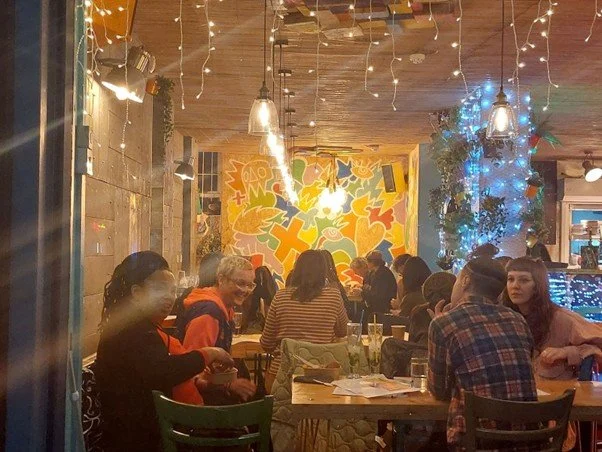
Through early conversations with local artists across artforms - including theatre, live art, poetry, visual arts and writing - a consistent picture emerged. Artists spoke about:
Barriers to accessing networking events – from travel costs to sensory overload and social anxiety.
A landscape saturated with events, but with little that felt meaningfully different or tailored to their needs.
Questions about the term “under‑represented” – what it really means in practice, and who is left out.
Ongoing precarity – many artists juggling multiple jobs, caring responsibilities, disability and the rising cost of living.
As one survey response later summed up:
“As working‑class creatives in Greater Manchester, we often feel like there are invisible walls between us and creative opportunities… It can be intimidating to step into rooms where you don’t see yourself represented.”
Manchester Artist Network (MAN) grew out of this listening. It is a partnership between GM Arts Spirit and STAF that combines a new kind of networking offer with small, targeted Access Bursaries, designed to meet artists where they are – geographically, financially and emotionally.
2. Designing a different kind of network
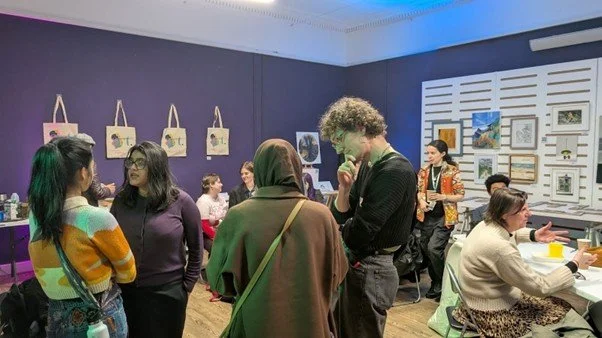
Rather than replicating traditional city‑centre networking with noisy rooms, name badges, speed introductions and unspoken hierarchies, STAF set out to create low‑stakes, high‑care spaces.
Manchester Artist Network:
Welcomes artists at any stage of their journey, from people returning to practice after a long break to those testing new directions.
Hosts events across the city, in community‑rooted venues outside the usual cultural quarter.
Frames gatherings as “Join the network to chat, collaborate or just hang out!” with no enforced interactions, no loud music or klaxons, and no pressure to perform.
Builds in care and access from the start. Free food, support for access needs, and space for people to arrive as they are.
Crucially, STAF staff take on the work of “signposting in person”. Attendees can share an opportunity, a question or a request with a member of the team, who then acts as an amplifier – putting questions or requests to the room on their behalf. This simple design choice removes some of the most exposing aspects of networking for people who may be anxious, shy, neurodivergent or simply new to the sector.
“The events were promoted as ‘casual networking’ with no enforced interactions… and an offer for STAF staff members to ‘signpost in person’, becoming amplifiers for questions and requests on behalf of attendees.”
This approach is mirrored online. The Manchester Artist Network website includes read‑along audio on key pages, helping make information more accessible to people who process text differently, or who are browsing on the move.
3. Taking the network across the city
In 2024–25, Manchester Artist Network delivered a season of events across multiple wards, including Hulme, Northenden, Longsight, Piccadilly, Cheetham, Woodhouse Park and beyond. Venues ranged from community centres and welcome hubs to independent restaurants and creative workspaces.
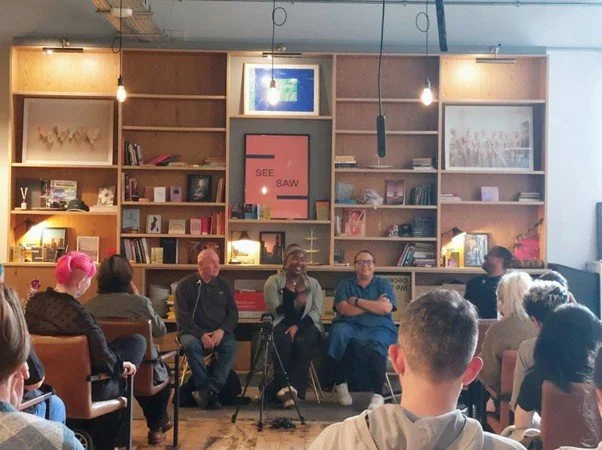
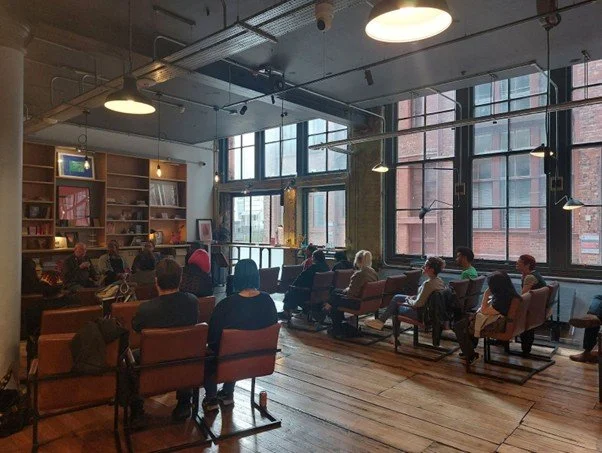
Across the season, attendance grew as word spread. A highlight for the programme was a spring panel event at SeeSaw in May 2025, bringing together:
Tracy Gentles (SICK! Productions)
Ada Eravama (LaLa Arts)
Lou Beckett (community arts organiser)
Facilitated by Tian Glasgow, STAF’s Programme Development Lead, the conversation explored what a more caring, sustainable ecology for Manchester’s artists might look like.
“You have to really commit and listen over a long period of time to really find out what’s needed… We’re all part of one ecology. If any bit of it is suffering, the whole thing suffers.” – Panel contributor
For many artists, the combination of near‑to‑home venues, free entry, and an explicitly welcoming framing made it possible to attend networking for the first time in years. As one bursary recipient later wrote:
“I have managed to attend my first creative networking events in Manchester which inspired me more and made me feel more connected to my community, as we all share the same struggles.”
4. Removing friction from small but vital bursaries
Alongside the network events, and supported by funding from GM Arts, STAF piloted an Access Bursary scheme to address one of the clearest barriers raised in early conversations: the lack of small, flexible pots of money that artists can access without jumping through complex, bureaucratic hoops.
The design principles were simple:
Keep the administrative load low for artists.
Ask only for the information genuinely needed for decision‑making and due diligence.
Avoid putting people’s benefit status or financial safety at risk.
Treat artists’ time and expertise with respect.
The bursary process was structured in four stages:
Stage 1 – Application (eligibility and ideas)
Artists completed a short online form focused on eligibility and what the bursary might unlock, not a detailed justification of their artistic worth or career story. Decisions to fund were made at this stage.
Stage 2 – Artist identity and context
Successful applicants were then invited to reflect on how they currently identify as artists, including people who are very early in their ambitions, practicing for their own wellbeing, or returning after time away.
Stage 3 – Video call onboarding
Each recipient met online with Emily Benita, STAF’s General Manager to confirm bank details, talk through payment timelines and ask questions. This step was designed as a reciprocal safeguarding process, building trust on both sides and actively countering common scam patterns.
Stage 4 – Short evaluation
At the end of the bursary period, recipients completed a concise evaluation form that fed into the wider GM Arts Spirit evaluation.
Feedback on the process itself was consistently positive:
“Very straightforward. I appreciated how simple it was. Many application processes are needlessly complex and detailed; they require a lot of unpaid work from artists.
“The application process was simple and straightforward… It made the bursary extremely accessible to me and didn’t put me off.”
“It was a really easy process, I was respected at all times and really encouraged in what I’m doing.”
And the numbers were striking:
84 applications were received, from artists aged 18–70.
33 bursaries awarded, with some artists requesting less than the maximum amount so more people could be supported.
Applications from 26 different Manchester wards, with particularly strong engagement from Withington, Levenshulme and Hulme.
Payment was also experienced as fast, clear and human:
“The payment process was quick and straightforward. Providing my details over a video call and communicating with Emily made it feel more personal.”
“Amazing – it was prompt and simple. It was lovely to meet a member of the team… This gave a sense of connection and security.”
5. What difference did it make?
Because the bursary was deliberately modest – around £100 per artist – the evaluation focused on qualitative difference rather than headline‑grabbing sums. Even at this scale, the impact on artists’ practice and confidence is clear.
Recipients used their bursaries to:
Buy materials and equipment (from paints, canvases and brushes to better printing tools).
Cover travel costs and tickets to theatre shows, workshops and training.
Pay for short courses or one‑to‑one tuition in areas like dance, sewing, scriptwriting and printmaking.
Invest in safer or more sustainable ways of working at home, such as better ventilation and non‑toxic materials.
Create or adapt workspace – for example, separating a bedroom into a dedicated art space.
Artists describe the bursary as unlocking both practical progress and emotional permission:
“Just receiving the bursary helped me feel supported and valued as an artist… It allowed me to feel comfortable spending money on my art, instead of guilty.”
“The bursary was vital to me being able to afford to attend a scriptwriting course… This has been key to helping me kick off a new type of artistic practice.”
“It’s been really great to have the funds to develop some new skills… It’s not clear yet what effect the new skills will have on my practice – but I’ve no doubt it will be of big use later down the line.”
Others highlight the wider ripple effects:
“I have expanded my creative network beyond my existing bubble.”
“This has increased my motivation and confidence, and given me a boost of joy!”
The combination of casual, caring network events and a simple, well‑designed bursary scheme has begun to chip away at the “invisible walls” many Manchester artists described at the start of the programme.
6. Learning for funders and commissioners
Manchester Artist Network and its Access Bursaries offer several clear lessons for funders and commissioners looking to support artists more equitably:
Small, flexible grants matter. Even modest amounts can unlock training, travel and materials that are otherwise out of reach – especially for artists balancing low incomes, caring roles and health conditions.
Design to remove unnecessary bureaucracy. Application and payment processes that are short, friendly and transparent send a powerful message of trust, particularly to people who have been put off by complex forms elsewhere.
Careful design of networking spaces changes who shows up. Removing loud music, forced icebreakers and rigid formats, and offering staff as in‑room “amplifiers”, can make the difference between an artist walking through the door or staying home.
Place matters. Taking events into neighbourhood venues across the city, and promoting them as casual, wellbeing-centred spaces, supports artists to engage close to home rather than travelling into the city centre. Crucially, it also directs investment into local venues, where hire fees can be significant in sustaining their ongoing activity, compared with larger, multi-use, publicly funded cultural spaces.
Listening is ongoing work. The programme began with conversations and continues to be shaped by feedback – from survey responses about barriers, to artists’ recommendations for future mentoring, subsidised training and studio access.
Relationships are part of the method. A human approach alongside access adjustments can lower physical and psychological barriers and help build trust, agency and belonging.
As one participant put it:
“The bursary scheme is an excellent system. It provides direct support, and it goes towards supporting ongoing creative development… I am very grateful for the support you have offered. I hope this is the start of a process for supporting artists in the development of their practice in Manchester.”
7. What’s next?
Looking ahead, Manchester Artist Network and GM Arts Spirit are exploring how to:
Build on the success of small bursaries with deeper mentoring and training offers, especially for artists balancing full‑time non‑arts work or returning to practice.
Further extend the geographical reach of casual networking events, including more daytime and family‑friendly formats.
Share learning with other boroughs and networks interested in centring care, accessibility and artist‑led definitions of what “under‑represented” really means.
What began as an experiment in more caring, less intimidating networking is becoming a practical model for how to hold space with and for artists – one that combines warmth, rigour and trust in the people who make Greater Manchester’s cultural life possible.
